

If you’ve read the headlines and political statements about the recent B.C. Supreme Court decision in Cowichan Tribes v. Canada, you might think we’re on the brink of a property market collapse. Some commentators have and will paint a picture of chaos — homeowners losing their titles, investors fleeing, and uncertainty gripping the economy of British Columbia. The goal is to generate fear through confusion, rather than helping the Canadian public understand a case that has been centuries in the making.
The court’s decision recognized that the Cowichan Alliance — made up of Cowichan Tribes, Stz’uminus, Penelakut, and Halalt — hold Aboriginal title to about 780 acres on Lulu Island in Richmond. This wasn’t a quick political gesture or a legal “loophole.” It came after years of testimony, historical records, and applying the very test for Aboriginal title created by the Supreme Court of Canada in Tsilhqot’in Nation v. British Columbia.
Let’s take a breath. The truth is much less dramatic — and far more important.
Who Are the Cowichan Alliance?
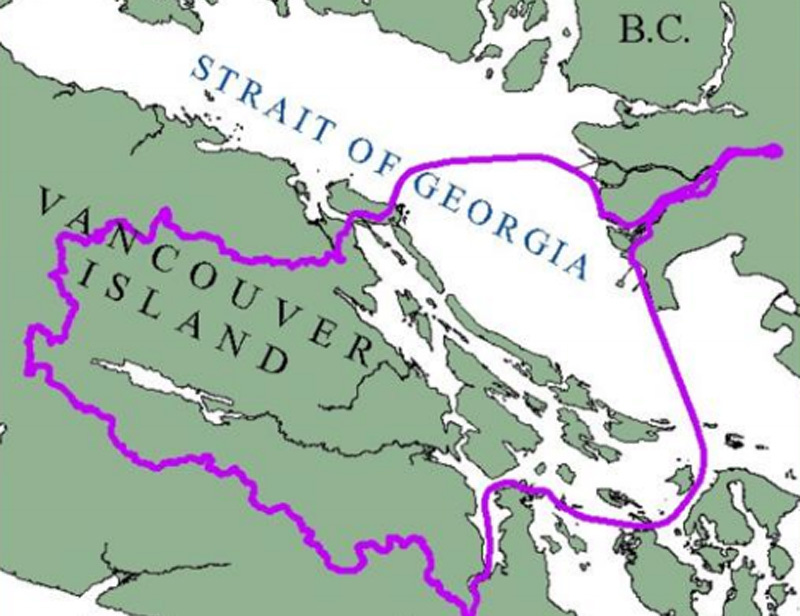
The Cowichan Alliance represents a group of Indigenous peoples made up of 11 local groups at the time of European contact in the early 1790s, and when the British Crown asserted sovereignty over British Columbia in 1846.
The present-day Cowichan Tribes, Stz’uminus First Nation, Penelakut Tribe, Halalt First Nation, and Lyackson First Nation are the direct descendants of these historic Cowichan people and their 11 local groups. As the modern successor groups, the four plaintiff bands in this case — together with the Lyackson — were declared the rightful holders of the Aboriginal rights and title at issue.
Historically, the Cowichan occupied multiple winter villages along the east coast of Vancouver Island, from present-day Cowichan Bay in the south to Chemainus in the north. They also maintained winter villages on the southern Gulf Islands, including Kuper (Penelakut) Island, Thetis Island, Valdes Island, and Willy (Halalt) Island.
As recognized in this court decision, every summer, they travelled to their village at Tl’uqtinus on the south arm of the Fraser River — living seasonally, fishing (primarily for salmon), and harvesting resources together. For more than 150 years, they have fought to reclaim Tl’uqtinus and have their title and rights respected. This case is not simply about land; it is about a broken promise, the displacement of a people from their home, and the resilience required to see justice finally take shape.
A Promise Made — and Broken
In 1853, Governor James Douglas assured the Cowichan that the Queen had given him a special charge: to treat them with justice and humanity, so long as they remained at peace with the settlements. This was no casual remark — it was a solemn promise that engaged the honour of the Crown, a constitutional principle requiring the Crown to act honourably in all dealings with Indigenous peoples.
At that time, the Cowichan continued to occupy their thriving village at Tl’uqtinus. Colonial officials recognized it as an “Indian settlement.” Yet, despite this recognition, the Crown never created a reserve for the Cowichan at Tl’uqtinus. Instead, without their knowledge or consent, the lands were sold to settlers.
The court has now confirmed that the Cowichan have an Aboriginal right to fish for food on the south arm of the Fraser River — a right that predates European arrival in the 1790s and remains integral to their culture. The Courts also stated very clearly that that right was never dependent on the permission of the Musqueam or any other Indigenous nation.
Understanding Aboriginal Title
From 1871 to 1914, the government issued Crown grants over the entirety of the Tl’uqtinus lands. The first purchase was made by Richard Moody, the colony’s first Chief Commissioner of Lands and Works. His job was supposed to include ensuring that Indigenous settlements were reserved for their rightful occupants. Instead, those lands were taken. Many grants in this period were issued without legal authority — because occupied Indigenous settlements were not supposed to be sold in the first place.
The impact was devastating. The Cowichan Alliance lost their village lands and their ability to fish on the south arm of the Fraser River — a fishery central to their survival and culture. British Columbia’s later transfer of ownership to the City of Richmond, along with control over highways and soil, compounded the injustice. Federal activities and those of the Vancouver Fraser Port Authority still infringe on Cowichan title today.
The point is this: these First Nations rightfully owned the land, and the government sold it after taking it from them illegally. For all the people worried about “losing property rights,” there’s little acknowledgment that it was First Nations who actually lost theirs.
What Aboriginal Title Really Means
According to the Supreme Court of Canada, Aboriginal title is the right to the exclusive use and occupation of land. This case rests on the fact that the Cowichan Alliance lived on and governed these lands long before Canada existed. This is not a “gift” from the government — it’s a constitutional right under section 35 of the Constitution Act, 1982.
The court also acknowledged that the Cowichan’s fight for these lands has been a long, ongoing struggle for recognition. Its ruling directs federal and provincial governments to negotiate in good faith with the Cowichan to reconcile Aboriginal title with existing interests such as public infrastructure and private property. They have 18 months to begin that process.
What it will not do is tear up home titles or hand over private buildings. If you own a house in Richmond, no one is coming to evict you. The judge was explicit: this is about reconciliation, not dispossession.
Why the Panic?
Some of the alarm comes from misunderstanding. Land title law is complex, and the idea that Canadian property law and Aboriginal title can exist side by side is unfamiliar to many. Some of it is political — opponents of Indigenous rights often frame recognition as an attack on “ordinary Canadians.” And some of it is simply that fear sells. “Court requires B.C. to negotiate in good faith” doesn’t grab attention like “Your property could be at risk.”
But this ruling is exactly what reconciliation looks like in practice. We’ve all heard the word so often that it can feel abstract. Here, it’s tangible. The legal system is saying: these rights are real, they’re constitutionally protected, and they must be respected in how we manage land today. But the remedy? Hardly radical or revolutionary.
The courts routinely and meagerly just direct the Crown and First Nations to negotiate to settle disputes.
The Cowichan Tribes v. Canada decision is precedent-setting because it’s one of the clearest examples yet of how Aboriginal title can be recognized in areas that include long-established public and private property — but not in the way critics are claiming. The ruling confirms that Aboriginal title is a constitutionally protected right that can coexist with today’s legal and economic realities. It doesn’t rip up property deeds or evict homeowners. Instead, it sets out a framework where governments must negotiate with the title-holding Nation to reconcile those rights with current ownership and land use.
That’s the precedent: a legal path for bringing together Indigenous title and private property without erasing either. Critics frame it as a threat, but in reality, it’s a shift toward clarity — showing that recognition of Aboriginal title doesn’t have to mean instability, but can be the foundation for respectful, negotiated coexistence.
The Cowichan’s Goals
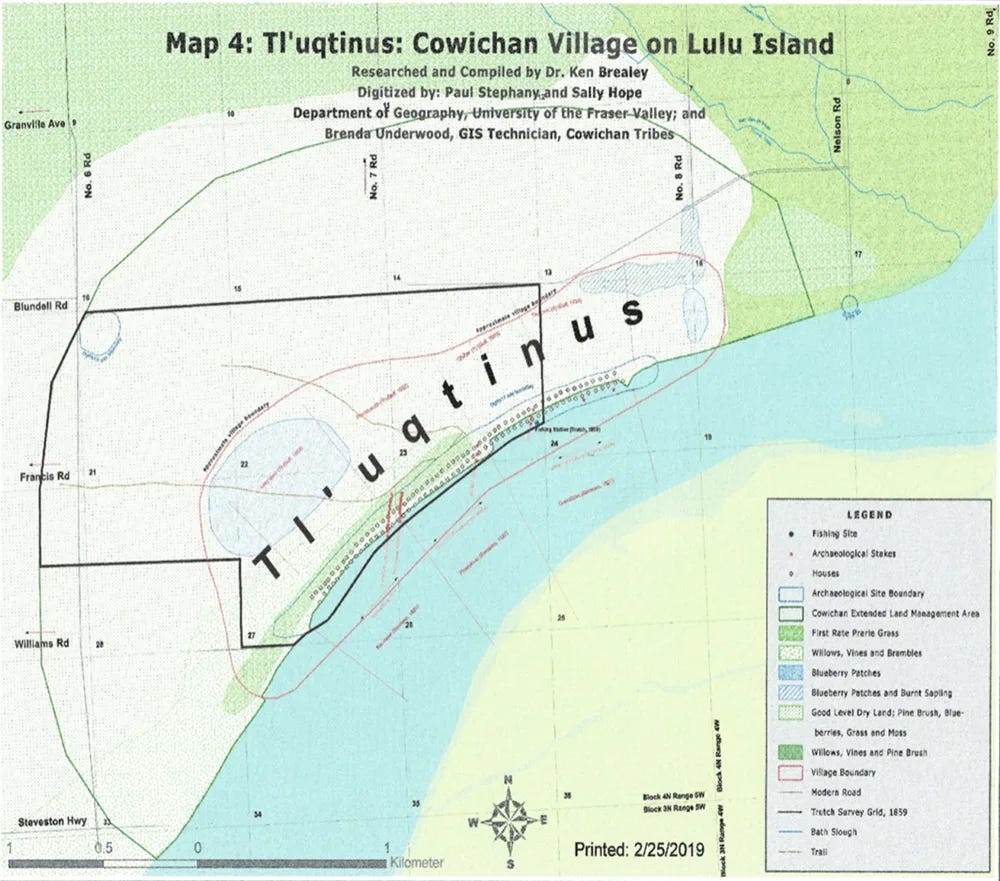
The Cowichan Alliance was clear: their goals were focused, not sweeping. They asked the court to formally recognize their right to fish for food on the south arm of the Fraser River, a practice central to their culture for generations.
They did not ask for the return of privately owned properties. Their focus was on lands still held by public bodies — the Crown, the Vancouver Fraser Port Authority, and the City of Richmond. For privately held areas, they sought negotiation, not dispossession.
These facts are rarely mentioned by opponents of Indigenous rights or by media outlets that stoke the flames of fear.
This is not new territory. Across Canada, modern treaties, shared governance, and land use agreements have shown that Indigenous title and contemporary property rights can be reconciled. These arrangements strengthen relationships, protect the environment, and provide certainty, not chaos.
An Opportunity, Not a Threat
The next steps are clear. The B.C. government has said it will appeal, but unless the ruling is paused, it still has 18 months to negotiate in good faith with Cowichan alongside the federal government. Those talks will focus on how to reconcile Aboriginal title with today’s mix of public, private, and industrial lands — a process that could involve co-management, land swaps, leases, or compensation.
For private property owners, nothing changes overnight; their titles remain intact while governments and Cowichan work out practical solutions. In other words, the case now moves from the courtroom to the negotiation table, where the real work of reconciliation begins.
The Province of British Columbia has announced its intent to file a legal appeal to the B.C. Court of Appeal. The B.C. Court of Appeal can uphold, overturn, or amend the decision. Other parties like the Musqueam Indian Band or the Tsawwassen First Nation could also appeal. Then, after a decision by the B.C. Court of Appeal, another appeal to the Supreme Court of Canada could occur, but is only granted for issues of national importance. Unless a stay is granted, the 18-month negotiation timeline from the trial ruling continues during the appeal.
If parties decide to appeal this decision, it could continue for many years to come until a final and absolute decision is rendered.
However, instead of treating these types of decisions that recognize Aboriginal title as a danger, it could be seen as an opening. An opening for B.C. and Canada to lead — to honour rights without destabilizing the present, and to show that reconciliation is more than a land acknowledgment at a public event.
The truth in reconciliation begins with an honest understanding: Indigenous Peoples owned this land long before Canada existed. The country was built on top of that ownership, and today we are still dealing with the consequences of the Crown’s failure to act honourably over the centuries. If Canada had upheld its promises and treated Indigenous Nations with justice from the start, these matters would not be as complex or unresolved as they are now. This is why First Nations are — and always have been — the architects of certainty in British Columbia.
Respect for First Nations is not just a moral obligation; it is essential to the success of our province. And that success is entirely within reach, thanks to the tremendous generosity and patience First Nations have shown toward Crown governments for generations.
This article reflects my personal views and interpretation of the court’s decision. It should not be taken as the official position of the Squamish Nation or any other group I am connected to.
Excellent analysis. Should be in all the major media, but won’t be. No clicks for truthtelling.
Thank you.